Chapter 2: Read and write music notation
Chapter 2 Introduction
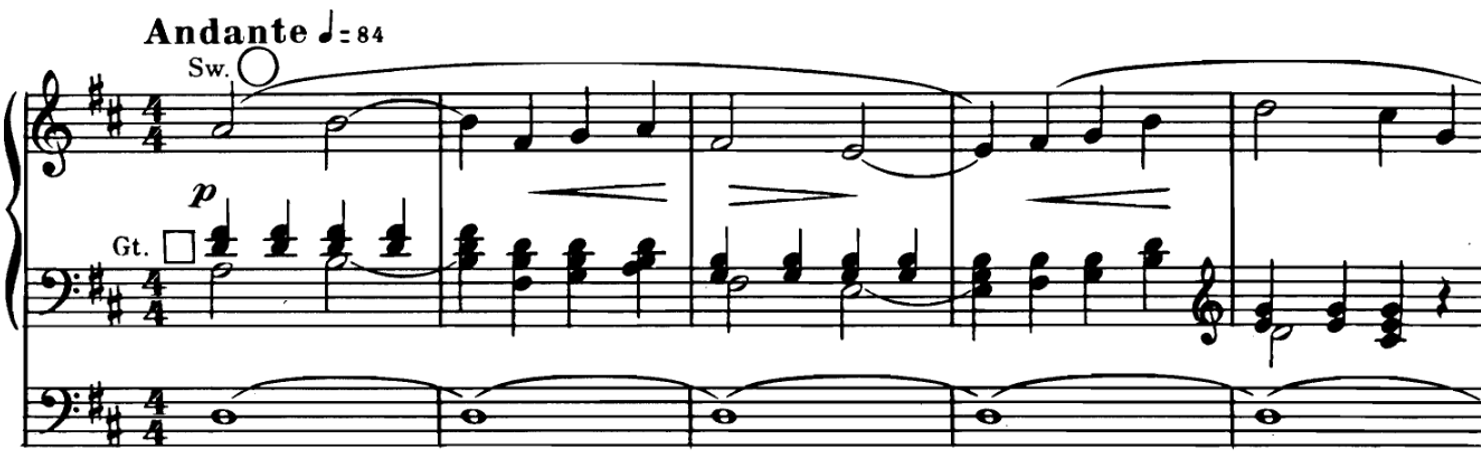
What happens when someone who reads music notation looks at a musical score? You may already read music notation well. If so, you might know that in the very first measure are symbols that tell you the speed of the beat (tempo), how loud or soft to play (dynamics), and which set of notes the performer will be using the most (key). Music notation is a visual representation of sound. If you are an experienced reader, you might be able to tell that the score is for a solo instrument, in treble clef, that’s it’s instrumental and not vocal.You might even compare it to known genres or works. Expert readers might be able to predict what might come next, or even hear the sound in their imagination, a skill called audiation (see Section 1.3).
Chapter 2 Challenge – Working with scores
In this chapter, the challenge we’ll be trying to solve is how to work with musical scores. Whether you’re reading an orchestral score or a lead sheet, you’re still working with some kind of musical score. Most musical scores include information related to beat, tempo, melody, and harmony, at the least.
Chapter 2 Goals
By the end of this chapter, you should be able to:
- Notate key signatures, pitches, and accidentals
- Notate time signatures, and durations
- Notate dynamics and articulations
- List and define solfege syllables
- Conduct duple, triple, and quadruple meters
Chapter 2 Vocabulary
Accidental – Pitches that are not in the key signature are called accidentals.
Bars and bar lines – Vertical bar lines divide the staff into short sections called measures or bars.
Clef– The clef symbol on a musical staff tells you which pitches belong on the lines and spaces of that staff.
Double bar lines – A double bar line, either heavy or light, is used to mark the ends of larger sections of music, including the very end of a piece, which is marked by a heavy double bar.
Dynamic markings – Symbols that appear above and below the music may tell you…how loud it should be (dynamic markings)
Interval – The distance between two pitches is the interval between them. The name of an interval depends both on how the notes are written and the actual distance between the notes as measured in half steps.
Key signature – The key signature at the beginning of a musical staff lists the sharps or flats in the key.
Meter – The meter of a piece of music is the repetitive arrangement of strong and weak pulses in the rhythm.
Notes and rests – The notes and rests are the actual written music. A note stands for a sound; a rest stands for a silence.
Scale – A scale is a list of all the notes in a key. Major scales all follow the same interval pattern.
Staff – The staff (plural staves) is written as five horizontal parallel lines. Most of the notes of the music are placed on one of these lines or in a space in between lines.
Tempo markings – Symbols that appear above and below the music may tell you how fast it goes (tempo markings)
Time signature – The time signature on a musical staff tells you the meter of the music by defining both the number of beats in a measure and the type of note that fills one beat.
Definitions adopted from “Understanding Basic Music Theory” by Catherine Schmidt-Jones, 2013. CC-BY
Section 2.1 – Using music notation
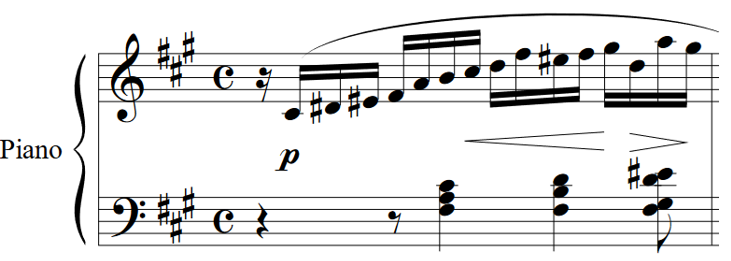
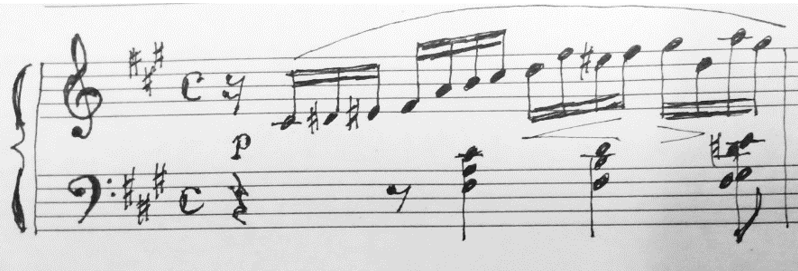
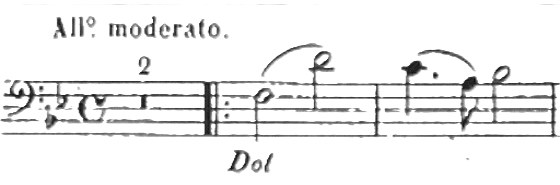
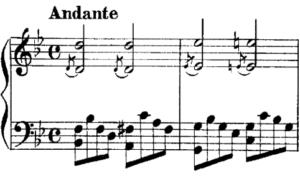
In this section, you’re going to practice using music notation. You will copy musical examples from actual scores onto your own staff paper or music notation software. Start by drawing your attention to the information notated on the page. Then, copy or replicate the symbols/notation as clearly as possible. It’s ok if your handwriting isn’t neat or if the score on your screen doesn’t look exactly like the example. The goal is to build your music reading skills and prepare you to write down melodies and rhythms while taking transcription (see Chapter 5). Example 2.1.1 has been completed for you as an illustration.
Example 2.1.1 – “Prelude and Fugue in F# minor” by Clara Schumann
Original example:
Handwritten copy:
Example 2.1.2 – “Etude for Cello No. 1” Opus 46 by Louise Farrenc
Copy the example provided.
Example 2.1.3 – “Harmony Club Waltz” by Scott Joplin
Copy the example provided:
Section 2.2 – Introduction to solfege
Many musical traditions use some kind of structure to organize pitch and/or rhythm. Solfege is one such system that uses syllables to organize and make sense of tonal melodies and harmonies in the Western musical tradition. In tonal music, there are a series of seven different pitches, repeating over octaves, with one pitch (the “tonic”) serving as the most important pitch. Melodies and harmonies move up and down, returning to the tonic over and over. In solfege, every pitch in the seven pitch series is given a specific name, in addition to its letter name.
The solfege syllable names are:
- Do
- Re
- Mi
- Fa
- Sol
- La
- Ti
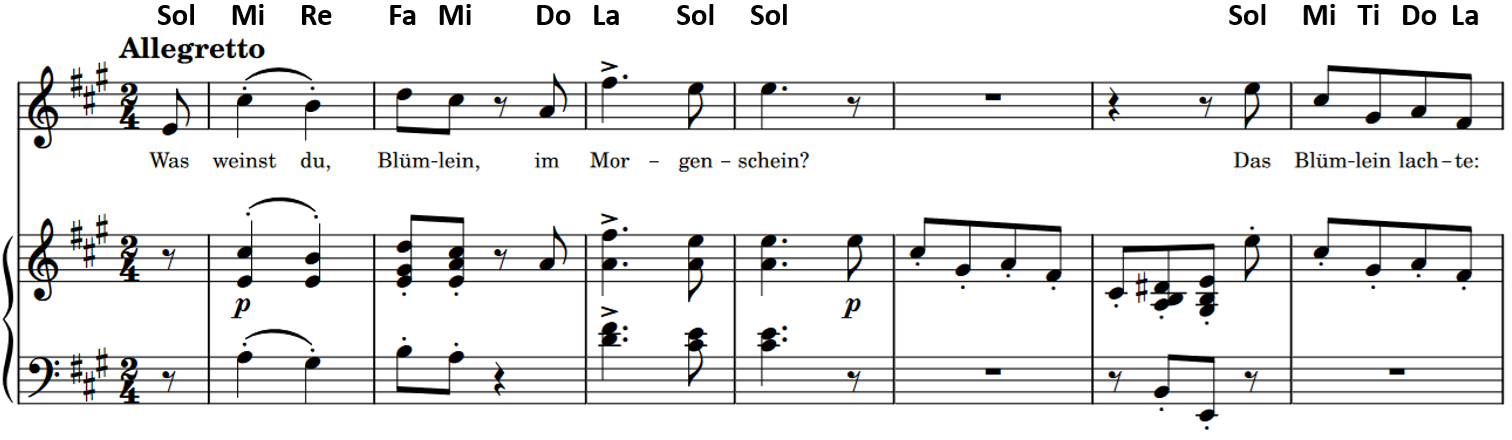
Solfege can be used in “fixed do”, with C always being do, or “moveable do” with the tonic note being do. This resource and many music courses use the moveable do system because it can be simpler to learn and use. However, you should know about the fixed do system in case you encounter it elsewhere. The fixed do system often includes additional solfege syllable names. Example 2.2.1 shows a two step process for adding solfege syllables to a score: create a table to match the pitches to their syllables. Then, use the table to label the score with the solfege syllables.
Example 2.2.1 – “Was weinst du, Blumlein” Op. 23 by Clara Schumann
The example below is in the key of A major. Each pitch in the key has a corresponding solfege syllable.
| Do | Re | Mi | Fa | Sol | La | Ti |
|---|---|---|---|---|---|---|
| A | B | C# | D | E | F# | G# |
In the score below, the solfege syllables for each pitch have been added above the melody.
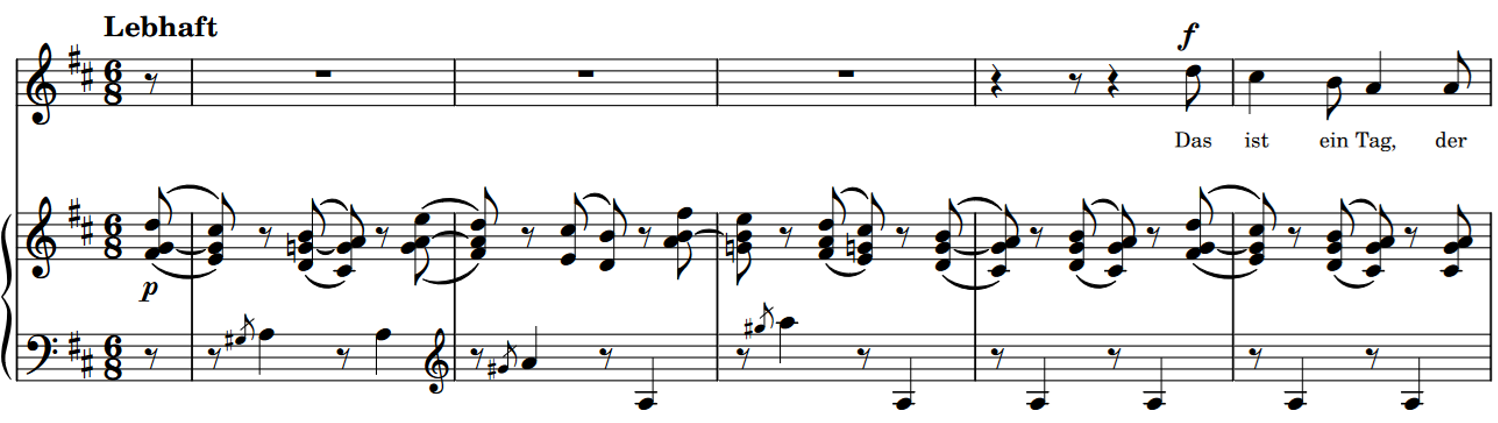
Example 2.2.2 – “Das ist ein Tag, der klingen mag” Op. 23 by Clara Schumann
On your own, create a table or list of the notes for each solfege syllable in the key of D major. Then, use the syllables to annotate the musical score above the vocal line.
Section 2.3 – Using conducting patterns
Conducting patterns are specific hand gestures used by ensemble leaders to communicate the tempo and beat of music while it’s being performed. Conducting patterns are generally standardized, although there is significant variation in how individuals use conducting patterns. In this section, you’ll learn the conducting patterns for three meters: duple (two beats per measure), triple (three beats per measure), and quadruple (four beats per measure).
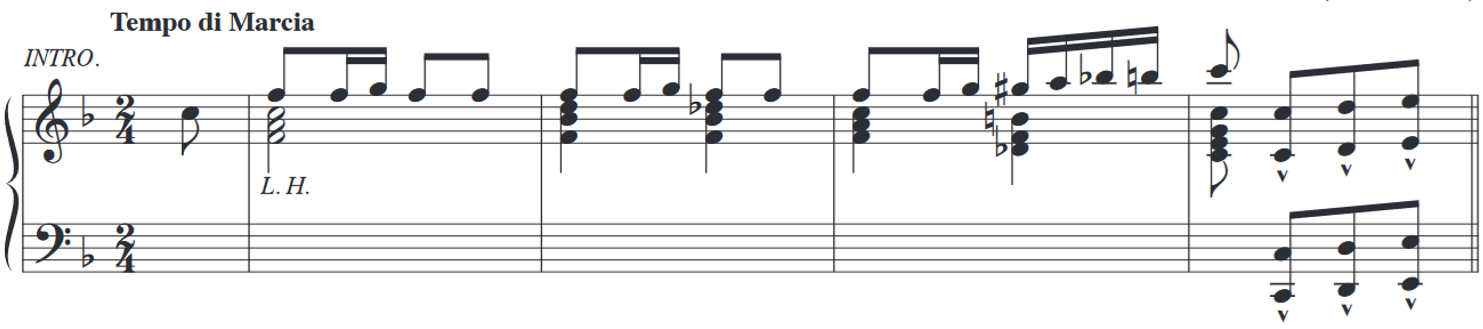
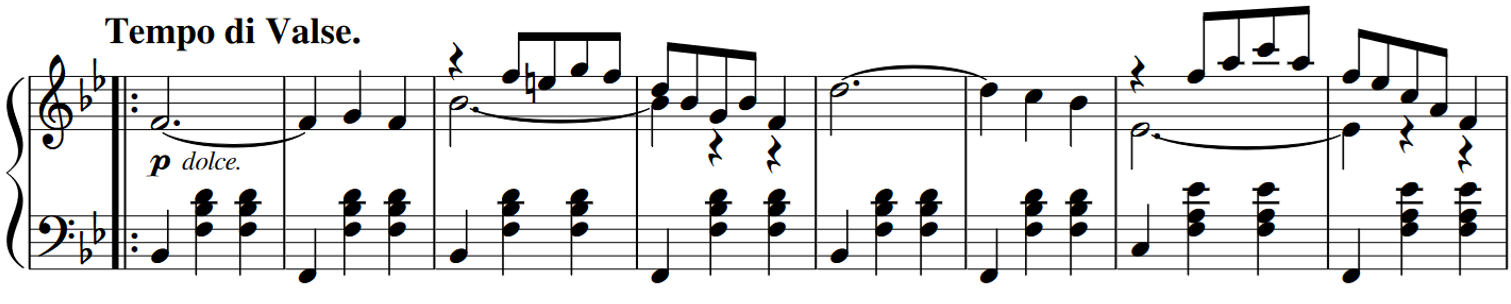
In each example, start by reviewing the conducting pattern as demonstrated by your instructor or from a video provided by your instructor. Practice moving your left or right hand through the pattern. You may need your instructor, a mentor, or friend to help you practice. Next, count along with musical scores provided in examples 2.3.1, 2.3.2, and 2.3.3. If it helps, try writing the number of beats above each measure. Last, try moving your left or right hand through the conducting pattern while you follow along with the score. You can say the beats out loud while conducting if it helps (ex. “one – two – three, one – two – three”). Don’t worry if you can’t execute the conducting patterns perfectly or if you find your tempo speeding up or slowing down. The goal is exploration and practice, not mastery. As you get more confident, try practicing in front of a mirror to build your technique.
Example 2.3.1 – “Cleopha” by Scott Joplin
Example 2.3.2 -“The Augustan Club Waltz” by Scott Joplin
Example 2.3.3 – “Adoration” by Florence Price